
CRPS and Reflex Sympathetic Dystrophy: an Overview
by Jacob Teitelbaum MD
Vitality101.com |EndFatigue.com
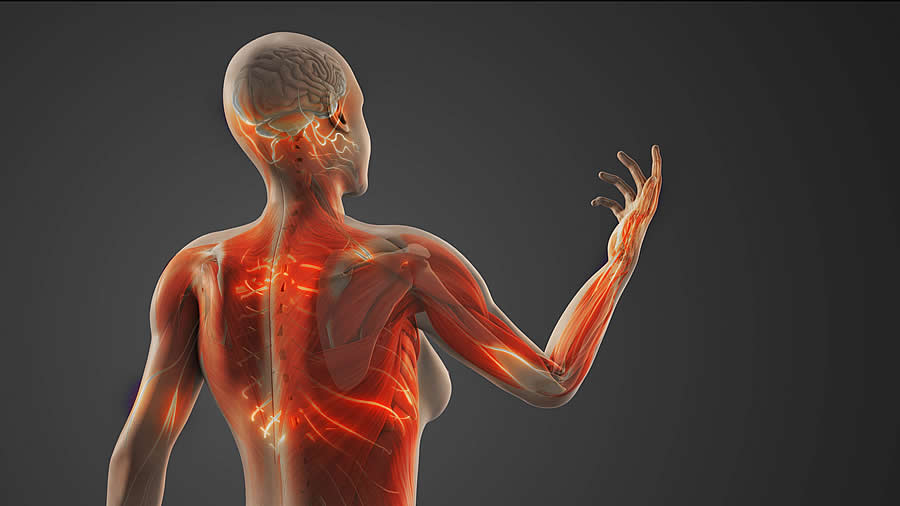
It is important to recognize that multiple kinds of pain are involved in CRPS. In addition to the pain caused by sympathetic reflex issues and neuropathic pain, there is a very large component of secondary muscle pain that may also be a severe cause of the discomfort.
How to Begin
Look for a Pain Medicine Specialist
Called "Physical Medicine and Rehabilitation" or "Physiatry" specialists, most of these come from either an anesthesia background (focusing on surgical and injection techniques), or more of an internal medicine background which includes treating myofascial/muscle/nerve pain. In the beginning of the illness, the former is most helpful as the nerve blocks can be most beneficial in the first 12 to 18 months. After that, somebody who knows how to do trigger point therapy and other muscle techniques may be more effective.
Watch This Excellent Video by Dr. Pradeep Chopra
This video has a wealth of helpful information and is a good place to begin. If you can see him for CRPS medical care, this would be highly recommended as well. (Visit Pradeep’s website.)
There are many other steps as well, but these offer a very good beginning and can be extremely helpful for what has been a very challenging condition in the past.
Next Steps
For CRPS: Treating the Root Causes
1. IV Biphosphonates (use whatever is available locally). Use Pamidronate 90 mg administered once over 3-4 hours (give in 500 cc normal saline). Per Pradeep Chopra Clodronate 300 mg IV daily for 10 days; or Alendronate 7.5 mg IV once; both can cause initial flaring of symptoms in Acute CRPS, so it is better for chronic CRPS. He also uses Pamidronate 60 mg IV; Neridronate (Italy study; Current study in US Underway). If unable to get this treatment, simply proceed with the others below.
2. Turn off the “brain pain” (e.g. microglial activation, central sensitization, and other components) associated with, and amplifying the chronic pain. I would use both LDN and PEA together. If either one is not available, the other is very helpful even on its own.
- LDN (low-dose naltrexone) 3 mg a night at bedtime is very helpful and simple. It can settle down what is called central sensitization, a key component of the pain. Higher doses will not work. This is available from compounding pharmacies. They usually cost about a dollar a day. They may initially disrupt sleep a bit. If this happens, take in the morning and begin with lower dosing and work up instead. The benefits can be marked over time and usually begin after about 2 to 3 months, with side effects disappearing. LDN cannot be taken if one is on narcotics. See Low-Dose Naltrexone for how to use.
- PEA (Palmitoylethanolamide. This safe and generally affordable natural compound has dozens of studies showing it to be a superstar in pain management. But because it is low cost, most physicians never hear about this research. The PEA has been shown to be effective for a wide array of chronic pain causes. Initial reports suggest these include CRPS.
I recommend a high absorption form called “PEA Healthy Inflammation Response with Serratiopeptidase.” Each capsule has 300 mg.
Here is the dosing recommended by pain specialist Prof Jan Keppel Hesselink:
- He starts with PEA 1,200 mg a day, gives it a month, and then goes to 2400 mg for 2 months as a fair therapeutic trial.
- Most often, he sees pain relief beginning at three weeks using this higher dosing.
Once you see what works best for you after three months, you can adjust the PEA to that dose. As symptoms stay settled for 3 months, dosing can likely be significantly lowered and still maintain the benefits.
This is very exciting research. Please email me at FatigueDoc@gmail.com and let me know your experience with it.
- IV ketamine protocols can be very helpful. Physicians who use these protocols will usually know the dosing, but it should be at least 1 mg per kilogram of body weight. Some physicians who give IV ketamine will also give intravenous lidocaine. Both increase with effectiveness over time.
- Nasal ketamine can be much easier and lower cost. The standard prescription is $800/dose and not usually insurance covered. But compounding pharmacies can make it for ~$3/dose in the nose spray. This is what can logistically work best for people after the first monitored dose. The compounding pharmacist may be able to guide your doctor and, with their OK, even guide you.
- The compounding pharmacies can also make topical ketamine cream that can be very helpful
- topical 50% DMSO (available from compounding pharmacies) applied two to three times a day has been shown to significantly to markedly diminish CRPS symptoms over several months. This is low cost with the only real side effect being a garlic smell. The compounding pharmacies can add ketamine to topical pain creams, making it even more effective
- Reset the limbic system (you can do this on your own)
with DNRS (Dynamic Neural Retraining System by Annie Hopper). Begin with the DVDs. Find a four-day stretch where you can focus simply on doing the program. Then one hour each day is recommended, but even 15-20 minutes a day as able can be very helpful. You’ll start to see results by about 8-10 weeks at 1hour a day. Some people then find a coach to help them do the workshops. Especially consider using this if sensitivities is an issue.
Another excellent approach instead of DNRS is ANS Rewire by Dan Neuffer. Takes less time commitment and very grounded. Both get similar results, but the “languaging” is different. Go on both websites and see which appeals most to you. If you can’t afford these programs, the book “Retrain Your Brain-CRPS” can teach you how to do it on your own.
For those with abuse/PTSD histories, also consider “Primal Trust.” Mix of DNRS/ANS Rewire and Somatic Experiencing.
For Pain
- Neurontin (gabapentin) 100-900 mg 3-4 x day as needed for pain. Other medications in this family and along with nortriptyline can also be quite helpful. As can many others.
- Baclofen 10 mg 1-2 tabs 3-4 x day for muscle pain (start low-can be very sedating).
- Compounded topical nerve pain creams including at least ketamine, Neurontin, baclofen, and lidocaine (available from ITC compounding pharmacy 888-349-5453 by prescription. Your physician can call the pharmacist there who will guide them). Apply topically one to three times a day to the painful areas and give these six weeks to start working. See if they can add the 50% DMSO to the same cream.
- Clonidine (catapres TTS patch 0.1-0.2mg/day) may help in some cases. NOTE: It lowers blood pressure. If stopped abruptly, it can send blood pressure too high.
It is common for a secondary fibromyalgia to be present in CRPS. This also needs to be treated, and can be done so effectively using our fibromyalgia protocols (see Vitality101.com). If fatigue, widespread pain, and poor sleep are present you likely have a secondary fibromyalgia. The quiz in step two at the above website will tell you if you do. The same protocols can help muscle pain in general.
General Support: BEGIN WITH PEA 2 a day. Helps in many ways. It takes 2-3 months to even START to see the benefits though. So give it time. (Learn more about PEA.)
Over-the-Counter Supplements:
(Available at EndFatigue.com)
Vitamin C (reduce free radicals): Suggested dose 250-500 mg by mouth once daily.
Fish oil (reduce inflammation and enhance immune system): use Vectomega two tablets a day. This markedly decreases the number of pills needed.
Energy Revitalization Drink Mix multi nutrient Powder (these have the B Vitamins, Vitamin C, magnesium, and vitamin D along with numerous other critical nutrients needed to help settle pain from a number of causes.
Acetyl L-carnitine (reduce free radicals and block T-type calcium channel): Suggested dose: acetyl L-carnitine 500 to 1,000 mg by mouth 3 times/day. This and the two below takes 3 to 6 months to start working.
- Lipoic acid 300 – 600 mg twice a day (can markedly help nerve discomfort). It can be combined with IV lipoic acid is below, and
- NAC (N acetyl Cysteine) 500 – 1,000 mg daily to increase glutathione.
Magnesium and Lpoic Acid:
Holistic physicians may also give magnesium 1 – 2 g over 1 to 2 hours plus lipoic acid 1,000 mg IV as often as 2 -3 times a week for a few months until pain settles down, and then it can be given less often. Lipoic acid is especially helpful and has been widely studied for neuropathic pain, but not yet for CRPS. But reasonable to give. The main side effect of Lipoic acid at doses over 600 mg intravenous is a drop in blood sugar, so the doctor should have an amp of sugar water to administer IV as needed (easy to address and not a big deal).
One of the World’s Top CRPS Specialists
Contact info for Dr Pradeep Chopra, and information from one person seeing him:
Pain management specialist in Pawtucket RI- Brown Medical University Professor. He has a ketamine IV clinic as part of his office in RI. He is usually the keynote speaker for the RSDSA organization and you can view his conference videos on YouTube or at RSDSA. One of the most compassionate CRPS knowledgeable doctors there is.
He does not take insurance. He and his team literally spent 5 hrs one on one with me! He sets up a basic treatment protocol for you and you take it back to your Primary Doctor and set up the program in your home state. After the appt- If you email him… he answers your questions and may even give you treatment options or new referrals.
Tel: (401) 729-4985
Website: The Center for Complex Conditions
Address (as of 2017):
102 Smithfield Ave
Pawtucket, RI
United States
I highly recommend getting the fourth edition (blue cover) of my book From Fatigued to Fantastic You will find a lot of this information to be helpful, as a secondary fibromyalgia is very frequently seen in CRPS. CRPS is also discussed in depth in my book Pain Free 1-2-3.
For Acute Flares of RSD/CRPS
(From: Tips for Managing Complex Regional Pain Syndrome.)
Given the cause of the pain flare-up, the treatment needs to be directed at stopping the NMDA activity. This is best accomplished with ketamine, an NMDA antagonist. A patient can only receive intravenous ketamine in a hospital environment, so emergency physicians need to be able to recognize and treat these severe pain flare-ups.
Treatment is straightforward:
- Initial bolus of 0.2–0.3 mg/kg of ketamine infused over 10 minutes. Giving this dose as an IV push will produce a high rate of dissociative side effects (up to 75 percent of patients) and should be avoided. Almost diagnostic is the patient’s response: severe pain should be resolved by the end of the 10- minute bolus.
- An infusion of ketamine (0.2 mg/kg/hr) for four to six hours. Although the medical literature for this is almost nonexistent, clinical experience has shown that an infusion of this duration resets the NMDA activity to baseline. Patients can return home on their usual medications, with the expectation that the flare-up, which can normally last weeks, will be over. Return rates for the same flare-up after ketamine treatment approach zero. For readers who feel four to six hours is too long, I encourage them to try shorter periods (two or three hours) and publish their results. No discharge prescription from the emergency department will be required.
Patients do not require admission, and they should not receive opioids. They do require the acute ketamine intervention, or they will suffer severe pain for weeks as a result of the flare-up. To date, there is no other effective treatment for a CRPS pain flare-up. Some researchers have studied an infusion of 5 mg/kg of lidocaine over a 60-minute period [Dr T note: I consider 3 mg per kilogram over 20-30 minutes, and then 2-3 mg/minute intravenous over three hours to be safer and more and effective for intravenous lidocaine] as an alternative treatment plan, but results are variable. Referral of newly diagnosed patients to physiotherapy and a comprehensive pain program is critical.
To Avoid Recurrence/Spread With Surgery
Take vitamin C 1,000 mg a day. In general the 500 mg should be taken daily as noted above to decrease recurrence risk.
Hope this is helpful for you. CRPS has been one of the hardest pain conditions to treat for decades. But it is finally giving way to effective treatment. The problem now is lack of physician education. The above will give you the tools you need. Please share them with your physician and others.
———————————-
References:
Ketamine with surgery: [vi] Schwartzman RJ et al, “Ketamine as Adjunctive Anesthesia in Refractory Complex Regional Pain Syndrome Patients: A Case Series, J Clinical Case Reports, 2:186 (Aug. 2012)